
Navigating the New Support at Home Service Agreements
With Support at Home now underway, providers must establish new service agreements for every transitioning HCP recipient — no "deemed" continuations allowed. Here's what's required, and how onboarding technology can streamline the process.
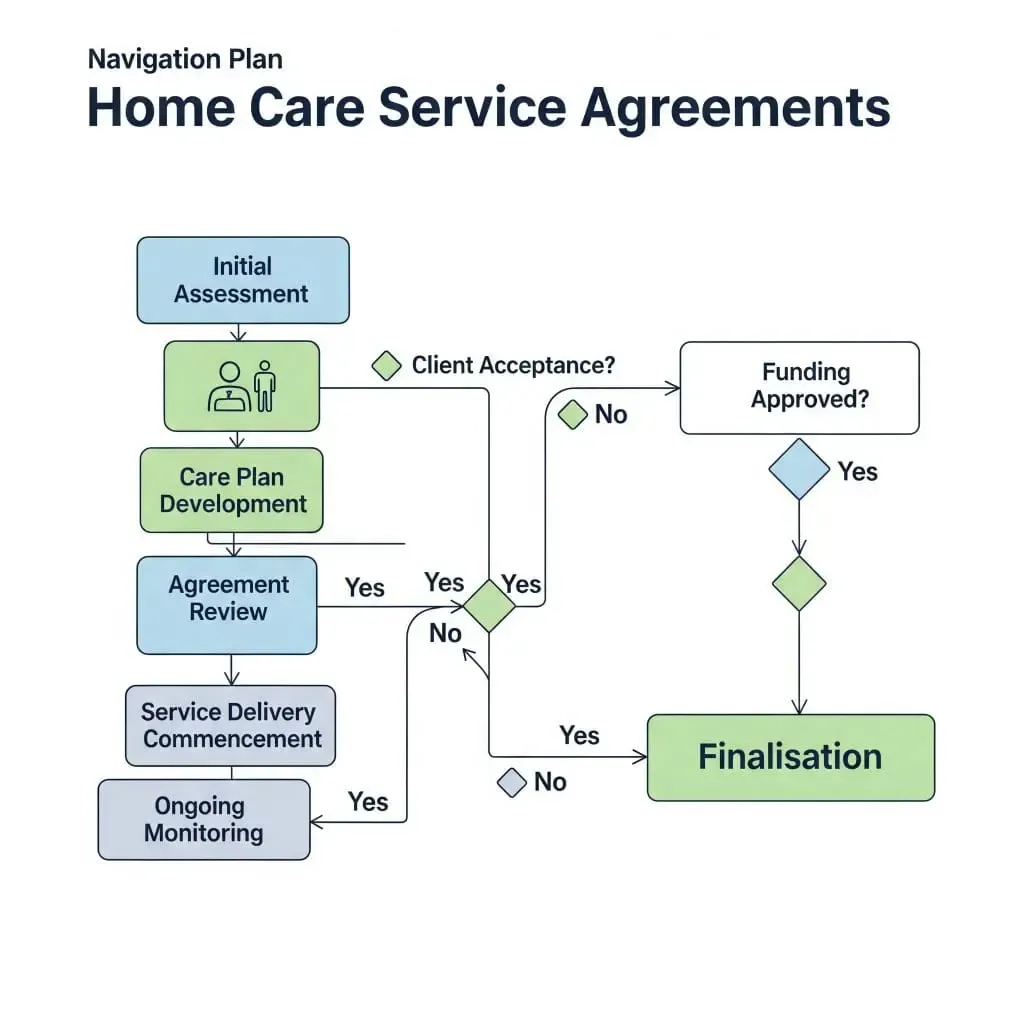
With the commencement of the new Support at Home program, a critical step for all providers and transitioning Home Care Package (HCP) recipients is the establishment of new service agreements. This is a vital process to ensure a smooth transition and a clear understanding of the services, costs, and responsibilities for all parties.
Providers are required to create a new service agreement or, at a minimum, an addendum or variation to the existing Home Care Agreement. This cannot be a "deemed" continuation of the old agreement. The Department of Health, Disability and Ageing has released the Support at Home: Template for service agreements to assist providers in meeting the new requirements, which are outlined in the final draft of the Aged Care Rules.
For participants, this is a chance to review their care plan and understand the changes. It's a two-way street; participants must agree to any new terms, including service prices. This is why it's so important for providers to give participants the time they need to properly review the agreement. Services must continue uninterrupted, even if the new agreement has not yet been signed. The only exceptions for ceasing services are very specific and include situations like the participant's needs changing to the point where they no longer require the service, or if there is a serious safety incident.
The process of creating these new agreements presents an opportunity for providers to streamline their operations. Onboarding technology can be a huge asset, enabling the digital creation and signing of agreements. This not only reduces the administrative burden of paperwork but also provides a secure, digital audit trail. Features like automated reminders and e-signatures can make the process faster and more efficient for both the provider and the client, ensuring a seamless and compliant transition.
Call Debra on 1300 664 130 to discuss how you onboard care recipients and if there's anything we can do at Care Collaborator to make this process more efficient.